
ISA Certified Arborist Tree Service Explained
- Callin Bos
- May 7
- 6 min read
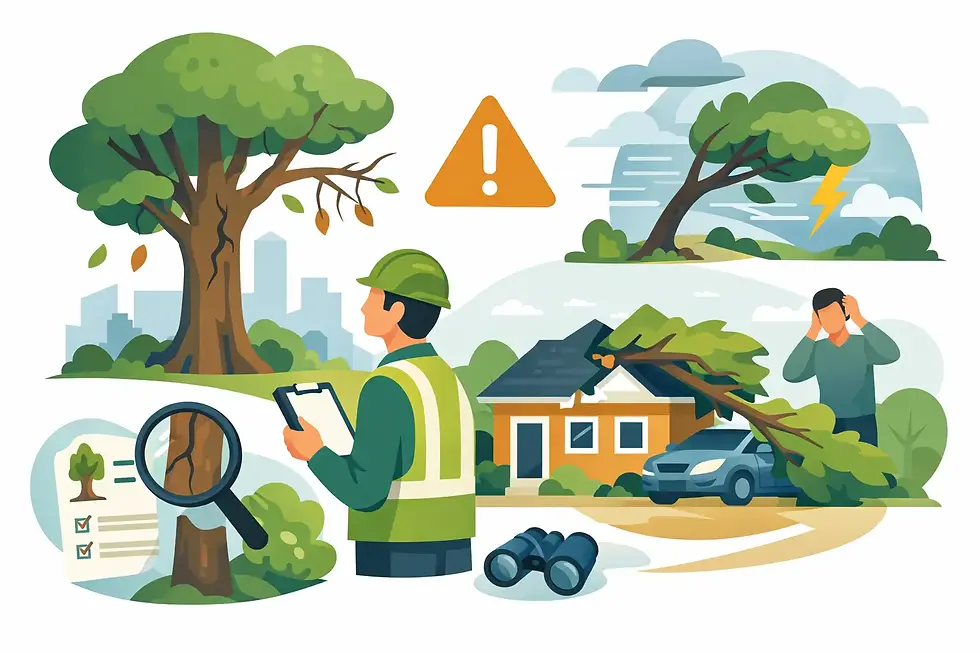
A tree hanging over a roofline, a split leader after heavy snow, or deadwood above a driveway is not the time to gamble on guesswork. ISA certified arborist tree service matters most when safety, tree health, and property protection are all on the line. For homeowners and property managers, certification is not a marketing extra. It is one of the clearest signs that the person evaluating your trees understands biology, structure, risk, and proper care standards.
In practical terms, an ISA Certified Arborist has demonstrated professional knowledge through testing and continuing education. That does not mean every certified arborist performs every kind of field work, and it does not mean every tree company without certification is careless. But when the job involves hazard mitigation, structural pruning, preserving valuable mature trees, or technical removals near targets like homes, fences, and utilities, certified expertise becomes far more than a credential on a business card.
What ISA certified arborist tree service actually means
When a company offers ISA certified arborist tree service, it means a professional with recognized arboricultural training is part of the assessment and care process. The International Society of Arboriculture sets standards around tree biology, diagnosis, pruning, soil management, installation, risk awareness, and safe work practices. Certification shows the arborist has met a baseline level of knowledge and continues to stay current.
For property owners, the value is simple. Trees are living structures, and their problems are not always obvious from the ground. A large limb can look stable and still carry internal decay. A tree can appear unhealthy and actually be recoverable with the right pruning and care. The difference between removal and preservation often comes down to informed diagnosis, not assumptions.
This is especially relevant on properties with mature shade trees, storm damage, tight work zones, or wildfire concerns. In those situations, poor advice can cost far more than the initial estimate. It can lead to preventable damage, unnecessary removal, increased liability, or long-term decline in trees that should have been managed differently.
Why certification matters in high-risk tree work
Tree work is not just landscaping with a chainsaw. It is technical hazard management performed around valuable assets and unpredictable loads. Once rigging starts over a roof, once a compromised tree leans toward a structure, or once heavy limbs are being reduced above pedestrian areas, precision matters.
A certified arborist brings a more disciplined decision-making process to the job. That starts with species-specific knowledge and extends to how cuts affect tree response, how defects change structural stability, and how site conditions influence risk. The best outcomes come from combining that arboricultural judgment with experienced climbing, rigging, and crew safety practices.
There is also an important distinction here. Certification supports better tree care decisions, but it should be paired with operational competence. On technically demanding jobs, you want both: an ISA-certified professional involved in diagnosis and planning, and a crew capable of executing the work without causing property damage. For complex removals or advanced pruning, that combination is what protects both the tree and everything around it.
When you should specifically ask for an ISA certified arborist tree service
Not every job requires the same level of expertise. Light brush trimming is one thing. A declining cottonwood over a garage is another. If you are dealing with dead limbs, storm damage, codominant stems, cracked unions, root concerns, trees growing close to structures, or high-value ornamental trees, asking for certified evaluation is a smart move.
It also matters when the right answer is not obvious. Many property owners call for removal because a tree looks rough or has dropped limbs. Sometimes that tree should come down. Sometimes selective pruning, cabling, bracing, or risk reduction can preserve it safely. A qualified arborist helps separate urgent hazards from manageable defects.
In areas like the Gallatin Valley, where snow load, wind exposure, mature landscapes, and defensible space concerns can all affect tree decisions, informed recommendations are especially valuable. A one-size-fits-all approach does not hold up well in real field conditions.
What certified tree care looks like on your property
Professional tree care should begin with a site-specific assessment, not a sales pitch. The arborist looks at species, age, form, defects, targets, site conditions, and the stated goal. That goal might be hazard reduction, structural improvement, canopy clearance, storm recovery, fire break preparation, or preservation of a signature tree.
From there, the recommendations should be clear and defensible. If pruning is proposed, there should be a reason for it beyond making the tree look smaller. If removal is recommended, the explanation should identify the defect, failure potential, target risk, or decline pattern driving that recommendation. If the tree can be retained, the scope of work should reflect that with measured cuts and realistic expectations.
Good arboricultural service is rarely about doing the most work. It is about doing the right work. Over-pruning can stress a tree, accelerate decline, and create future hazard issues. Under-pruning can leave defects unresolved. The right scope is usually somewhere in the middle, shaped by biology, structure, and the level of acceptable risk on the site.
Common services tied to certified arborist expertise
Pruning is the most obvious example, but not all pruning is equal. Crown cleaning, structural pruning, clearance pruning, end-weight reduction, and canopy restoration each serve different purposes. A certified arborist understands how to choose the method that improves safety and health without causing unnecessary stress.
Risk assessment is another major area. This includes identifying weak branch unions, decay indicators, root plate movement, deadwood, storm damage, and site targets. The goal is not to eliminate all risk. No tree care professional can promise that. The goal is to reduce unreasonable risk through informed mitigation.
Cabling and bracing can also benefit from arborist-led planning. These systems are not cosmetic fixes. They are structural support tools used in specific situations where retention is appropriate. Installed correctly, they can reduce failure potential in valuable trees. Installed carelessly, they can create a false sense of security.
Removal is part of arboriculture too. Sometimes the safest and most responsible recommendation is to remove a tree that is unstable, severely decayed, or poorly positioned relative to structures and use areas. When that happens, certified evaluation helps support the decision, and skilled execution helps carry it out without trading one hazard for another.
How to tell if a tree company is the right fit
Ask who is performing the assessment and what credentials they hold. Ask how they determine whether a tree should be pruned, supported, or removed. Ask how they protect surrounding property during climbing and rigging operations. If the answers are vague, rushed, or focused only on price, that is useful information.
A strong tree service should be able to explain the why behind the work in plain language. They should also be realistic. Not every declining tree can be saved. Not every defect is an emergency. Not every large tree near a house is automatically dangerous. Competence shows up in balanced recommendations, not fear-based selling.
For higher-risk work, it also makes sense to look for a company that pairs arborist knowledge with serious safety culture. Field qualifications, disciplined work practices, and careful planning matter when crews are operating above structures or in confined spaces. That is where premium service earns its value.
Climbing Dutchman Tree Service is built around that standard - certified expertise, precision execution, and uncompromised safety for demanding tree work where mistakes are costly.
The real value is better decisions
The biggest benefit of ISA certified arborist tree service is not the label itself. It is the quality of the decisions behind the work. Better assessment leads to better pruning. Better pruning supports better structure and longer tree life. Better hazard evaluation reduces preventable failures and helps avoid unnecessary removals. Better execution protects the property you have already invested in.
For a homeowner, that may mean preserving a mature tree that adds shade, value, and character without carrying unnecessary risk. For a commercial property manager, it may mean reducing liability exposure while keeping the site safe and presentable. For a landowner thinking about wildfire preparation, it may mean targeted mitigation instead of broad, damaging cuts.
If a tree problem feels urgent, complicated, or expensive to get wrong, certification should be part of your screening process. The right tree service will not just show up with equipment. They will bring trained judgment, clear recommendations, and the ability to carry out the work with control. That is what gives you confidence when the stakes are high.


Comments