Bundle Stump Grinding and Save $200
Support Vulnerable Trees With Tree Cabling and Bracing in Manhattan, MT
Support weak, damaged, or vulnerable tree structures with careful evaluation, ISA-certified knowledge, CTSP-led safety practices, and appropriate support systems.
Support Weak and Structurally Vulnerable Trees
Weak limbs, compromised branch unions, and other structural concerns can increase the potential for tree failure and property damage. In some situations, removing the entire tree may not be necessary. Climbing Dutchman, LLC provides tree cabling and bracing in Manhattan, MT, to add structural support to suitable trees while addressing identified weaknesses. We evaluate the tree, its condition, and surrounding property before determining whether a support system is appropriate.
Our ISA-certified knowledge and understanding of tree biology help guide decisions about structural tree care. CTSP-led operations keep safety-focused planning central to the process as we identify vulnerable areas and determine an appropriate support approach. Tree cabling and tree bracing may help manage movement, support compromised limbs, and reduce the likelihood of certain structural failures when used in suitable situations. Schedule cabling and bracing with Climbing Dutchman, LLC to have a structurally concerning tree evaluated and determine whether additional support may be appropriate.
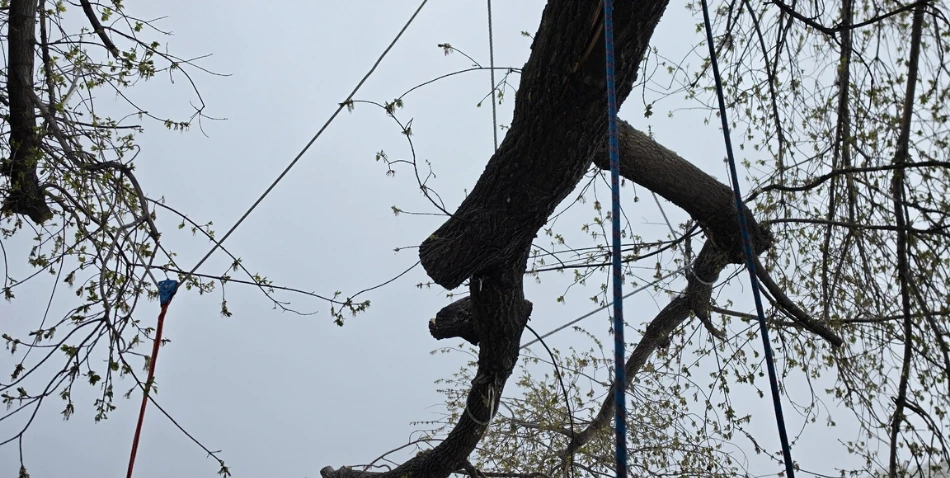
Reinforce Vulnerable Trees With Structural Support
A mature or valuable tree can develop structural weaknesses without necessarily requiring immediate removal. Heavy limbs, weak branch attachments, previous damage, multiple stems, or other structural conditions may increase stress on certain parts of the tree. When the tree is otherwise suitable for preservation, a carefully selected support system may help manage those concerns.
Climbing Dutchman, LLC begins with an evaluation of the tree rather than assuming every structural issue requires the same response. We consider visible weaknesses, branch arrangement, tree condition, potential targets, and surrounding property. This assessment helps determine whether tree cabling services, tree bracing services, pruning, removal, or another course of action should be considered.
Structural support may involve:
- Tree condition evaluation: We examine visible structural weaknesses, vulnerable limbs, branch unions, previous damage, and other conditions that may influence whether supplemental support is appropriate.
- Tree cabling: Cabling can provide supplemental support between selected limbs or stems to help manage movement and reduce stress on vulnerable portions of a suitable tree.
- Tree bracing: Bracing can provide additional structural reinforcement in certain situations where specific weak unions or compromised areas require more direct support.
- Support system planning: We consider tree structure, identified weaknesses, surrounding property, and the purpose of the support before determining an appropriate tree cable bracing system.
- Risk mitigation: Supplemental support can form part of a broader approach to managing tree hazards when structural concerns have been identified, and preservation remains a reasonable option.
- Ongoing tree care: Supported trees may continue to require monitoring and appropriate pruning as conditions change, allowing new concerns or changes in structure to be identified over time.
Tree bracing systems and cabling should be selected according to the actual structural condition of the tree. Installing support without understanding tree biology or the forces affecting a weak limb may fail to address the underlying concern. Our ISA-certified knowledge helps us evaluate how the tree is growing and where structural weaknesses may require attention.
A tree cabling company should also consider what could be affected if a limb or stem fails. A vulnerable branch over an outdoor living area, building, driveway, parking area, or other frequently used space can present different concerns than a branch over an open area. Understanding these site conditions helps inform the overall approach.
Cabling and bracing can also work alongside proper pruning when appropriate. Reducing unnecessary weight or addressing damaged growth may help manage stress on certain portions of a tree. In other cases, the condition may be severe enough that tree removal should be discussed instead.
Our goal is to give property owners clear information about the condition we observe and the support options that may fit the situation. Careful evaluation allows us to select an approach based on the tree rather than applying the same support method to every structural concern.
Address Structural Weakness Before Failure Occurs
A structurally compromised tree may continue standing for years, but changing weather, additional growth, heavy snow, wind, or further deterioration can place increasing stress on weak areas. Property owners may notice a large limb with a questionable attachment, multiple stems separating from a common union, visible cracking, or other signs that raise concerns about tree stability. These conditions deserve careful evaluation before a failure creates a more urgent problem.
Climbing Dutchman, LLC approaches structural tree care with attention to both preservation and hazard mitigation. When tree cabling and bracing is suitable, supplemental support may help stabilize vulnerable portions of a tree and reduce stress on weak areas. The appropriate approach depends on the tree’s condition, structure, location, and the nature of the weakness being addressed.
Tree cabling may be used to provide support between selected limbs or stems. Tree bracing can provide reinforcement for certain structural weaknesses where more direct support is appropriate. These systems serve different purposes, so the choice should be based on an evaluation rather than selected solely because a tree appears large or uneven.
Our ISA-certified knowledge helps us consider the biological and structural factors affecting the tree. CTSP-led operations support careful work practices during installation, while specialized climbing skills allow us to access elevated portions of trees when support is required above ground.
We also consider how surrounding property affects the concern. A weak limb positioned over a home, commercial structure, vehicle area, fence, walkway, or frequently occupied space may require particular attention because of what could be damaged if failure occurs. Identifying these potential targets is part of understanding the overall risk.
Supplemental support does not stop trees from growing or changing. Trees remain living structures affected by weather, growth, age, and environmental conditions. Supported trees may therefore require future observation and maintenance. Pruning may also be appropriate to address dead, damaged, or excessive growth that contributes to structural stress.
If evaluation indicates that the tree is too compromised for support to be a reasonable option, removal may need to be considered. Clear communication is important in either situation. We explain what we observe and discuss the tree-care approach suited to those conditions.
Choose Climbing Dutchman, LLC for tree cabling and bracing in Manhattan, MT, when a valuable tree has structural weaknesses that require careful evaluation, appropriate support, and safety-focused tree care.
Frequently Asked Questions About Tree Cabling and Bracing
-
Cabling and bracing can provide supplemental structural support for suitable trees with weak limbs, vulnerable branch unions, multiple stems, or other identified structural concerns. The specific support method depends on the tree’s condition and the type of weakness being addressed.
-
Visible cracks, weak branch unions, heavy limbs, multiple stems, previous damage, or other structural concerns may indicate that an evaluation is appropriate. We assess the tree before determining whether cabling, bracing, pruning, removal, or another approach should be considered.
-
In suitable situations, structural support may help manage weaknesses while allowing a valuable tree to remain in place. Not every compromised tree is a candidate for support, so its overall condition and the severity of the structural concern need to be evaluated first.
-
It may be. Pruning can sometimes complement structural support by addressing dead, damaged, poorly positioned, or excessive growth. Trees also continue to grow and change after a support system is installed, so future observation and appropriate maintenance may be needed.
-
No. Some trees may be suitable for cabling, bracing, pruning, or another form of risk mitigation, while others may be too compromised to retain safely. We evaluate the tree and surrounding conditions before discussing an appropriate course of action.

Support Vulnerable Trees Before Problems Grow
Address structural concerns with careful tree evaluation and an appropriate support approach designed around the condition, location, and weaknesses of your tree.