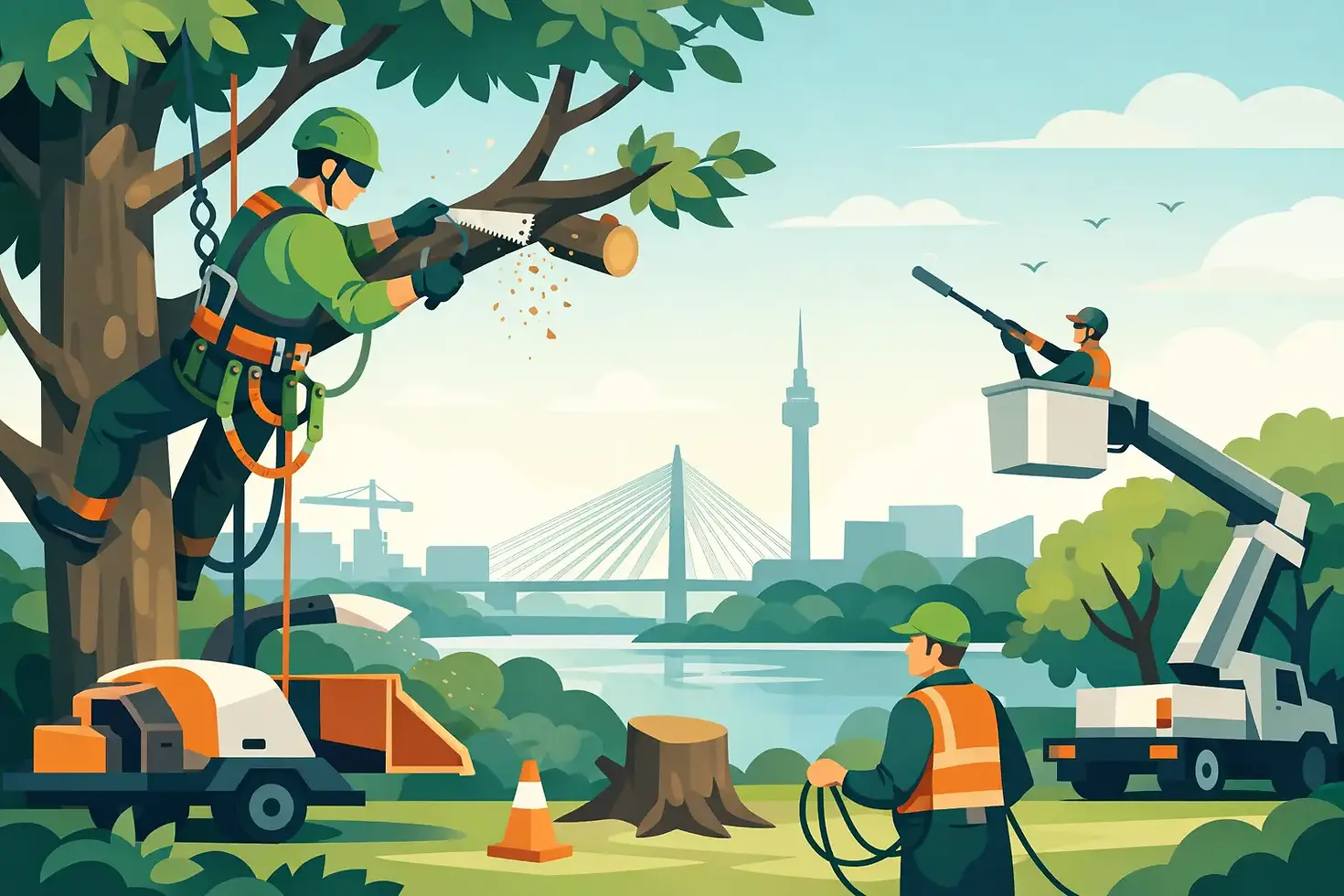
Belgrade Arborist Services That Reduce Risk
- Callin Bos
- May 25
- 6 min read
A heavy limb over a driveway does not stay a minor issue for long. In a place like Belgrade, arborist services are often less about appearance and more about preventing broken roofs, blocked access, damaged fences, and avoidable liability after wind, snow, or decay turns a tree into a hazard.
Property owners usually call after they notice something obvious - a split leader, deadwood over a structure, branches scraping a roofline, or a tree leaning where it did not lean before. The better time to act is earlier, when corrective pruning, structural support, or a targeted removal can solve the problem before it becomes expensive or dangerous. That is where certified tree care matters.
What Belgrade arborist services actually cover
Many people use the word arborist when they simply mean tree company, but there is a real difference. Professional arborist work is built around tree biology, structural assessment, and controlled execution. The goal is not just to cut wood. The goal is to manage risk, preserve tree health when possible, and protect the surrounding property throughout the job.
For residential and commercial properties, Belgrade arborist services typically include expert pruning, hazard mitigation, tree removal, cabling and bracing, stump grinding, debris removal, and shrub or hedge care. On larger properties, vegetation management and fire break work may also be part of the plan. Each service solves a different problem, and choosing the right one depends on the tree, the site, and the level of risk.
Pruning, for example, is not one category. Cleaning out deadwood, reducing end weight, improving clearance, and correcting poor branch structure all require different cuts and different timing. A removal near a fence line, garage, or power service drop is also a very different operation from dropping a tree into an open field. When the work is technical, the method matters as much as the result.
When a tree needs professional attention
The most common mistake property owners make is waiting for certainty. They want to know for sure that a tree is dangerous before calling. In practice, tree risk is rarely that simple. A tree can be alive and still be structurally unsound. It can look stable from one angle while hiding decay, weak attachments, root damage, or storm stress.
A professional assessment is warranted when you see hanging limbs, fresh cracks, hollow sections, fungal growth near the base, exposed roots, soil lifting, sudden lean, canopy dieback, or repeated branch failure. Trees that overhang homes, parking areas, barns, sidewalks, or play spaces deserve even closer attention because the consequences of failure are higher.
It also makes sense to schedule service when there is no emergency. Mature trees often need periodic structural pruning to reduce long-term load and improve spacing. Younger trees benefit from early correction so they do not grow into expensive defects. If you manage rentals, commercial sites, or HOA property, regular inspection is not overcautious. It is basic liability control.
Pruning for safety, structure, and long-term health
Good pruning is one of the highest-value services a property owner can invest in, but only when it is done with purpose. Cutting too much, cutting at the wrong time, or making reduction cuts without understanding future response can create the exact problems you were trying to avoid.
Safety-focused pruning usually starts with dead, broken, diseased, or weakly attached limbs. After that, the work may shift to clearance over roofs, driveways, walks, or equipment areas. In other cases, the priority is structural improvement - reducing competing leaders, lowering end weight on extended limbs, or improving branch spacing to lessen future failure.
There is always a trade-off. The more you remove, the more stress you place on the tree. The less you remove, the more risk may remain. That is why pruning should be tied to a clear objective rather than a vague request to thin it out. Trees do not benefit from cosmetic cutting if the structural problem goes untouched.
Hazard mitigation is not the same as removal
Not every risky tree has to come down. Sometimes the right answer is selective pruning, cabling, bracing, or restricting load on a flawed limb or union. Sometimes the right answer is removal because the defect is too advanced, the target is too valuable, or the species and site conditions make retention a poor bet.
Hazard mitigation means reducing the likelihood of failure or reducing the consequences if failure occurs. That could involve taking out one compromised stem while preserving the rest of the tree. It could mean reducing a long lateral over a house, installing supplemental support in a codominant union, or clearing around a tree so inspection and future maintenance are easier.
The key is judgment. A support system is not a way to save every tree indefinitely. In the right case, it extends the safe service life of a tree worth keeping. In the wrong case, it only delays an unavoidable removal while increasing cost and exposure.
Why complex tree removal requires precision
A tree removal in a tight space is a rigging project, not a cutting job. If a tree is close to a house, garage, septic area, fence, ornamental planting, or shared property line, every piece needs a controlled path from canopy to ground. That takes planning, climbing skill, proper equipment, and disciplined crew communication.
This is where certification and safety training matter. ISA-certified knowledge helps inform the assessment and work plan. CTSP-qualified safety standards shape how the crew approaches hazards, drop zones, tie-in points, rigging loads, and property protection. For the property owner, that translates into a simpler result - the tree is gone, and your structures, landscape, and access points are still intact.
There is also a cost question that deserves a straight answer. Technically demanding removals cost more than straightforward jobs because they require more labor, more rigging, more time, and tighter risk control. But in high-consequence settings, cheaper work often becomes expensive work after collateral damage, incomplete cleanup, or a partial job that leaves the site less safe than before.
Stumps, debris, and what happens after the cut
A lot of tree problems remain after the trunk is down. Stumps can interfere with mowing, attract attention in a finished landscape, and limit future use of the area. Leftover debris can block access or create cleanup burdens that property owners did not expect.
Stump grinding is often the cleanest next step when you want usable ground and a more finished site. Debris removal also matters more than people think, especially on commercial property, rentals, or homes where appearance and access affect day-to-day use. If the tree work is part of a broader cleanup or hazard reduction plan, those details should be addressed before the crew arrives, not decided in the middle of the job.
Fire break and vegetation management in higher-risk areas
For some properties, tree care is tied directly to wildfire preparedness. Overgrown understory, dead material, ladder fuels, and poorly spaced trees can increase fire intensity and reduce defensible space around structures. In those settings, arborist work becomes part of a larger hazard mitigation strategy.
That does not mean clear everything. Effective fire break work is selective. It focuses on spacing, removal of volatile or compromised material, reduction of fuel continuity, and safer access around buildings and drive lanes. The right balance depends on property layout, vegetation density, slope, and how the space is used.
Choosing the right provider for Belgrade arborist services
If you are comparing companies, ask better questions than simply who can do it cheapest. Ask how they assess tree risk. Ask whether they have certified arborist expertise behind the recommendations. Ask how they protect roofs, fences, pavement, and nearby plantings during removals. Ask what the cleanup includes and whether the plan changes if hidden decay or structural instability shows up once the work begins.
You should also pay attention to how the estimate is written. A professional proposal should describe the scope clearly enough that you know what is being pruned, removed, ground, or hauled away. Vague language usually leads to mismatched expectations.
For property owners in Belgrade and the surrounding Gallatin Valley, the safest tree work is usually the most deliberate tree work. That means clear assessment, controlled execution, and recommendations based on risk, not guesswork. If a tree on your property is raising questions now, it is worth getting a professional estimate before weather or time makes the decision for you.
The best tree care is rarely the most dramatic. More often, it is the work that prevents the emergency you never have to deal with.


Comments