
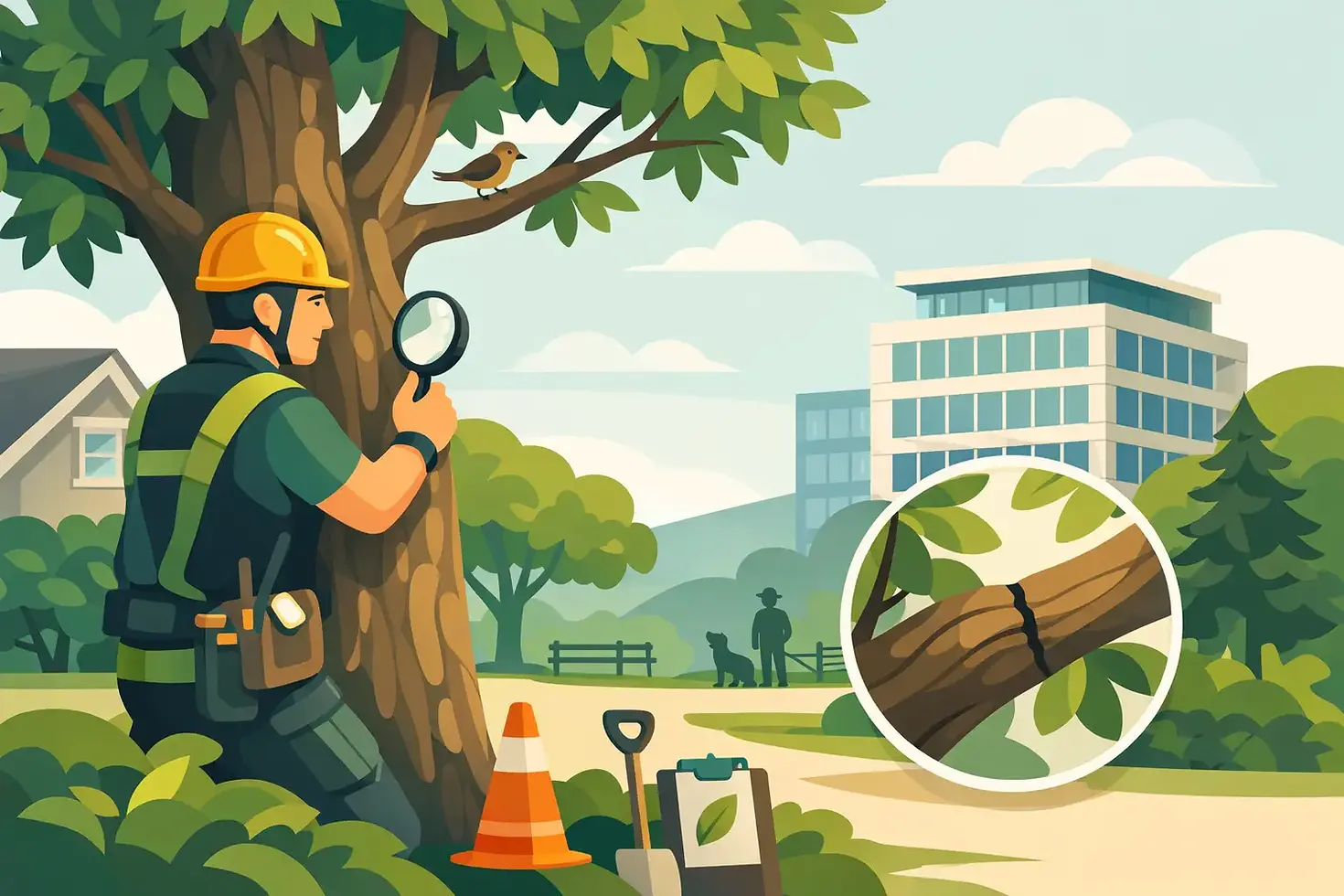
Professional Tree Inspection for Safer Properties
A mature tree can look solid from the driveway while carrying a serious defect overhead. A professional tree inspection looks beyond leaf color and overall appearance to identify structural weaknesses, decay, root problems, and limb failures before they put people, buildings, vehicles, or utility access at risk. For property owners in the Gallatin Valley, where heavy snow, wind, drought stress, and wildfire conditions can all affect tree stability, an inspection is a practical first step toward protecting the property.
What a Professional Tree Inspection Looks For
Tree risk is rarely limited to one obvious broken branch. A qualified arborist assesses the entire tree and the area it could affect if a limb or trunk section fails. That means evaluating the crown, trunk, root collar, surrounding soil, nearby structures, and the tree’s relationship to power lines, driveways, patios, fences, and pedestrian areas.
The inspection starts with the tree’s overall condition. Deadwood in the canopy, thinning foliage, unusual leaf size, premature color change, or dieback at branch tips can point to stress or decline. These symptoms do not automatically mean a tree must be removed. They do, however, provide useful evidence about whether the tree needs pruning, closer monitoring, further diagnostic work, or hazard mitigation.
The trunk receives close attention because it carries the tree’s structural load. Vertical cracks, open cavities, old wounds, fungal growth, bark separation, and included bark between major stems can all reduce strength. Some defects are visible from the ground. Others are only properly evaluated through a closer climbing inspection or by using specialized assessment methods.
At ground level, root health is equally important. Root damage is often hidden, yet roots determine whether a tree can remain stable in wind, saturated soil, or heavy snow. Exposed roots, soil heaving, girdling roots, construction damage, trenching, changes in drainage, and compacted soil may all contribute to failure risk. A tree can retain a full green canopy while its root system is under significant stress.
When to Schedule a Tree Inspection
A tree does not need to be visibly falling apart to warrant a professional assessment. Scheduling an inspection after a major windstorm, heavy wet snow, lightning strike, excavation project, or vehicle impact is a sensible response. These events can create fractures and root damage that are not immediately obvious.
Inspection is also appropriate when a tree begins leaning, drops unusually large limbs, develops mushrooms near the base, or has branches growing over a roof, parking area, play space, or walkway. A new lean is more concerning than a long-established lean, particularly if the soil is lifting or cracking on one side of the trunk.
Property changes should trigger a review as well. Building an addition, installing a driveway, changing grade, placing fill soil over roots, or running equipment repeatedly beneath a tree can affect its long-term health and stability. A tree that was acceptable in an open yard may present a different level of risk once a home office, patio, fence, or vehicle parking area is added beneath it.
For commercial properties and multi-unit sites, routine inspections help document conditions and prioritize work before a hazard becomes an emergency. This is especially valuable around entrances, sidewalks, parking lots, common areas, and high-traffic landscape zones where the consequences of limb failure are higher.
Risk Is More Than a Tree Defect
A defect matters, but the target beneath it matters just as much. A dead limb over an unused field and the same limb over a child’s swing set require different decisions. Professional tree risk assessment considers the likelihood of failure, the likely size of the failed part, and the consequences if it strikes a person or property.
This is why a responsible recommendation is not always full removal. A healthy tree with one overextended limb may be made safer through precise structural pruning. A split leader may be a candidate for cabling and bracing if the tree has strong value and suitable structure. A declining tree beside a house may require removal because the potential impact area leaves little margin for failure.
The right course depends on species, age, defect severity, site use, seasonal conditions, and the tree’s ability to respond to treatment. Cutting simply because a tree is large is not sound arboriculture. Leaving a compromised tree because it still has green leaves is not sound risk management either.
Common Problems Found During Inspections
Many hazardous conditions develop slowly enough that owners normalize them. A limb may gradually extend farther over a roof each year. A co-dominant trunk may deepen its included bark union over decades. Decay can progress behind apparently intact bark until weather loading exposes the weakness.
A thorough assessment frequently identifies dead, cracked, rubbing, or poorly attached limbs that should be removed before they fail. It may uncover canopy imbalance from past topping or storm damage, which can create weak new growth and concentrated loads at old cuts. It can also reveal clearance concerns around roofs, chimneys, service lines, access roads, and neighboring property.
In Montana’s dry periods, water stress can weaken trees already dealing with compacted soil, root injury, insects, or disease. During winter, snow and ice add substantial weight to branches, particularly on conifers and multi-stem ornamental trees. The inspection process connects these local pressures to the condition of the specific tree rather than relying on a one-size-fits-all rule.
What Happens After the Inspection
The value of an inspection is a clear, prioritized plan. Immediate hazards should be addressed first, such as a hanging limb over an entryway, a fractured leader above a roof, or a tree with active root plate movement. These conditions may require prompt professional action and controlled rigging to prevent additional damage during the work.
Next come corrective recommendations that improve structure and reduce future exposure. Selective pruning can remove deadwood, reduce excessive end weight, improve clearance, and address branches with poor attachments. When performed correctly, this work preserves the tree’s natural form and avoids the damage associated with indiscriminate topping.
Some trees benefit from support systems. Cabling and bracing can reduce movement between stems or support a structurally weak union in appropriate circumstances. These systems require informed design, correct installation, and periodic inspection. They are not a substitute for removal when decay or structural instability has already made retention unreasonable.
Removal becomes the prudent recommendation when a tree has severe decay, significant root failure, irreversible structural defects, or an unacceptable risk to occupied areas. Complex removal near homes, garages, fences, and landscaping demands experienced climbers, disciplined rigging, and a defined plan for every section of the tree. The objective is not merely to get the tree down. It is to control the work from start to finish without creating a second hazard.
Why DIY Assessment Has Limits
Homeowners can and should watch for obvious changes: fresh cracks, dead limbs, mushrooms at the base, leaf decline, or new leaning. But visual warning signs do not always show how extensive the underlying defect is. A cavity may be compartmentalized and manageable, or it may indicate major internal decay. A leaning tree may be stable, or it may be actively failing at the roots.
The same limitation applies to pruning from a ladder or attempting to remove a suspect limb without professional equipment. Tree work involves unpredictable loads, concealed decay, electrical hazards, and difficult cutting positions. The risk rises sharply when the tree is near a structure or when pieces must be lowered in a controlled manner.
A certified professional brings trained observation, appropriate equipment, and the judgment to distinguish between maintenance needs and urgent hazards. That creates a more defensible, cost-conscious plan than reacting after a limb damages a roof or blocks critical access.
Protect the Trees Worth Keeping
A tree inspection is not a prediction that every tree will fail, and it cannot eliminate every risk created by weather or natural change. It does provide the information needed to make timely, practical decisions before a manageable issue becomes a costly emergency.
If you have mature trees near a home, driveway, commercial building, or high-use outdoor area, arrange an assessment before the next storm tests their condition. Climbing Dutchman Tree Service provides professional hazard evaluation and precision tree care for property owners who expect uncompromised safety and clear recommendations.


Comments