
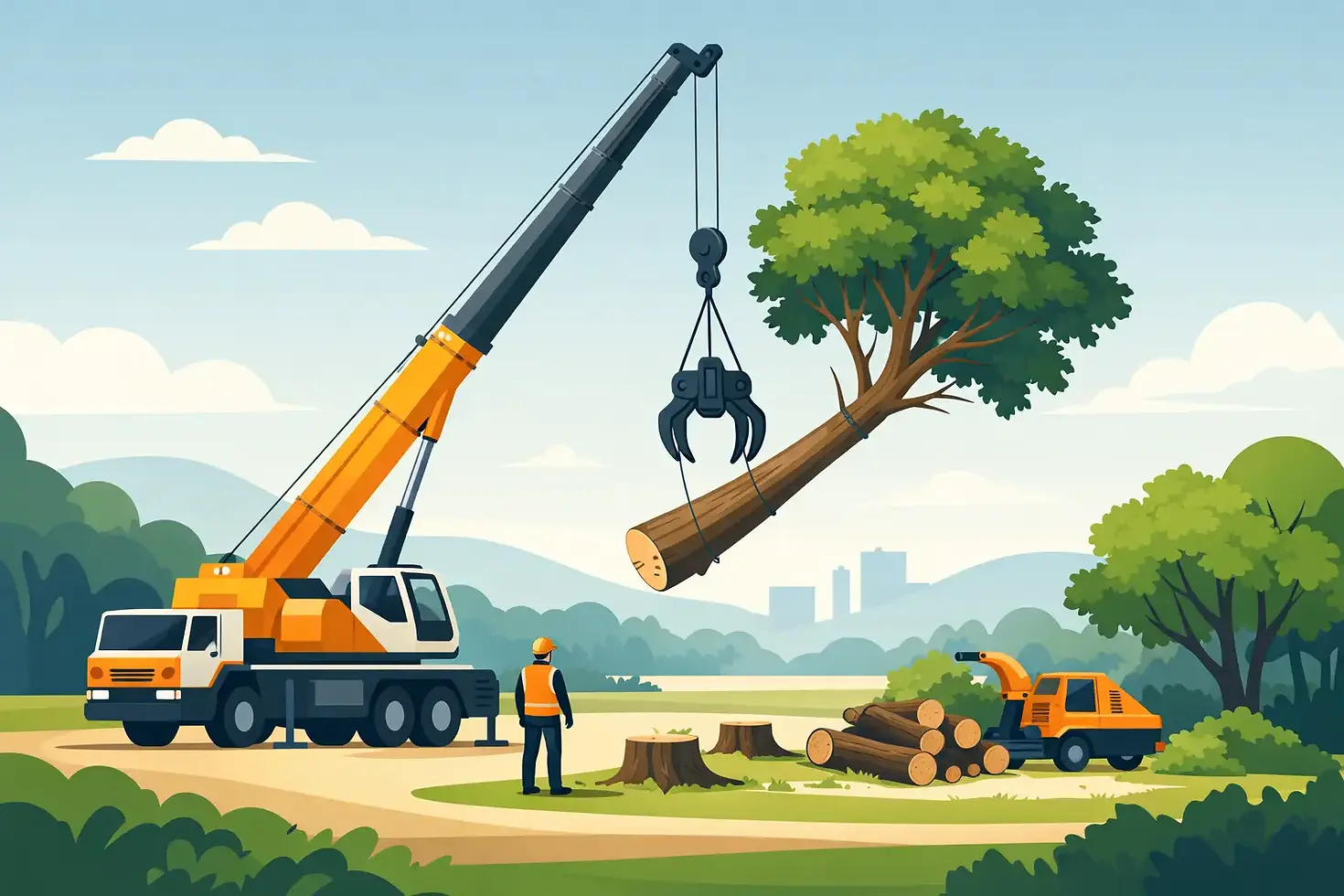
When Crane Removal Is the Safest Tree Option
A failing cottonwood leaning over a roof does not leave much room for error. Neither does a dead spruce crowded between a fence, power line, and neighboring property. In these situations, crane removal can be the safest way to dismantle a hazardous tree while controlling every major section from the canopy to the landing zone.
A crane is not a shortcut for ordinary tree work. It is a specialized tool used when climbing, conventional rigging, or dropping material would expose people, buildings, utilities, or the remaining landscape to unnecessary risk. The decision should follow a site-specific assessment by qualified tree professionals who understand tree defects, load forces, access limits, and safe work zones.
What Crane Removal Means for a Tree Project
Crane-assisted tree removal uses a mobile crane to support and lift sections of a tree as a climber or aerial operator makes controlled cuts. The crane carries each piece away from the tree, then lowers it into a designated landing area for processing. Rather than allowing large wood to swing through the canopy or descend on ropes, the crew manages its movement with a planned lift.
The process depends on coordination. The crane operator, climber, ground crew, and jobsite lead must share a clear plan for cut size, pick points, communication signals, landing zones, and emergency procedures. A poor lift plan can create as much danger as the tree itself. Proper crane work is deliberate, measured, and based on the actual condition of the tree and site.
For property owners, the practical benefit is control. Large, heavy sections can be removed without sending them over a roof, across a driveway, or into a carefully maintained landscape. That control is especially valuable when trees have become brittle, unstable, or too compromised for a climber to rig safely from within the canopy.
When a Crane Is the Right Choice
The right removal method depends on the tree, its location, and the consequences of a failure. Crane work is often considered when a tree is dead, structurally unsound, exceptionally large, storm-damaged, or positioned in a confined area. It may also be the preferred option when decay, root failure, split leaders, or hanging limbs make climbing and rigging unusually hazardous.
A crane can be particularly useful for trees growing beside homes, garages, retaining walls, fences, patios, and commercial buildings. In Gallatin Valley, mature cottonwoods and aging conifers can develop significant defects while standing close to structures. Snow loading, high winds, saturated soils, and hidden internal decay can turn a seemingly manageable removal into a high-risk operation.
Emergency situations can also warrant crane assistance. A tree that has partially failed, settled onto a structure, or become entangled in another canopy may not support predictable climbing or rigging forces. The first priority is not speed for its own sake. It is preventing the tree from moving further while the crew establishes a controlled removal plan.
That said, crane removal is not automatically the best answer for every difficult tree. A crane needs adequate road access, a stable setup area, and enough reach to safely work the tree. Soft ground, narrow approaches, overhead lines, buried utilities, slopes, and limited landing space can change the plan. In some cases, advanced climbing and rigging methods provide the safer and more efficient solution.
Why Tree Condition Matters Before the First Cut
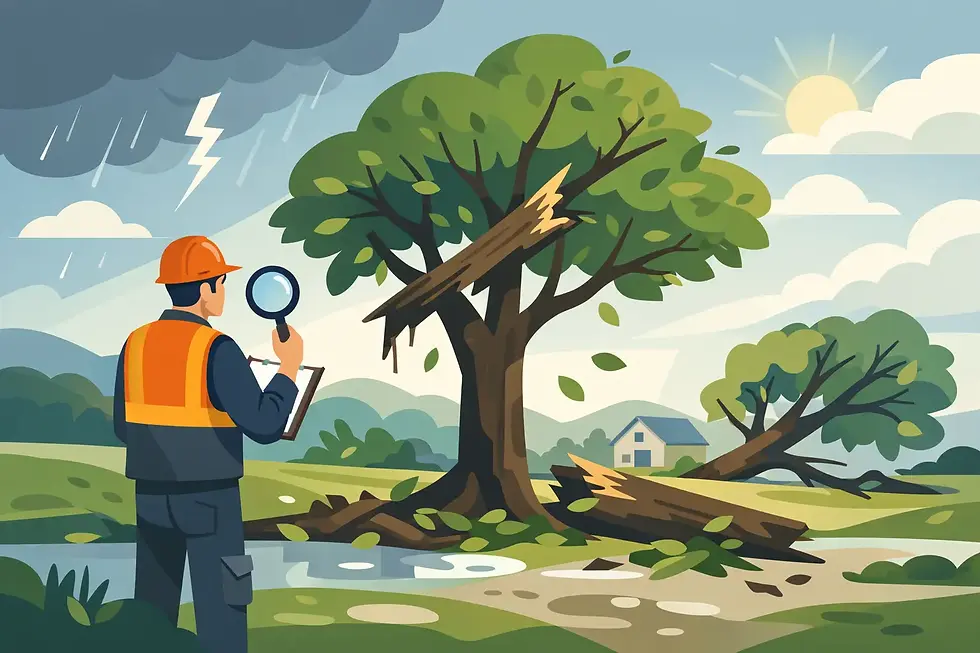
The visible size of a tree is only part of the risk. A certified arborist looks for the conditions that affect how a tree can be climbed, cut, and loaded. Cavities, fungal decay, cracks, dead tops, weak branch unions, root damage, and previous storm failures all matter. So do lean, wind exposure, soil movement, and the target beneath the tree.
A decayed trunk can fail under its own weight or react unpredictably once material is removed from the canopy. Dead limbs may break before they can be tied in. A stem with a long crack may not tolerate the side loading created by conventional lowering systems. Crane support can reduce some of these forces, but it does not remove the need for professional judgment.
Before work begins, the crew should determine whether the crane can reach the tree without crossing unsafe areas, where it will be positioned, and how each piece will be lifted. They also need to identify overhead electrical hazards and confirm that the intended landing zone remains clear throughout the project. This planning protects workers, homeowners, tenants, vehicles, and nearby structures.
Controlled Lifts Protect the Property Below
The central advantage of crane work is the ability to hold a section before it is fully separated from the tree. The climber attaches approved rigging to a calculated pick point, the crane takes the weight, and the cut is completed according to the lift plan. A ground crew then guides the piece as needed and processes it in the landing area.
This sequence reduces the chance of uncontrolled impact, but it is not a guarantee that nothing can go wrong. Wind, changing tree condition, tight clearances, and improper communication can affect a lift. That is why qualified operators, experienced tree crews, exclusion zones, and clear communication are not optional details. They are the foundation of uncompromised safety.
Preparing Your Property for Crane-Assisted Removal
Property owners can help a complex project run efficiently by making access and site conditions clear during the estimate. Point out septic systems, irrigation components, decorative stonework, buried lines, gates, weak driveways, and any areas that should not carry equipment. A professional crew will also assess these factors, but local knowledge from the owner or property manager is useful.
Vehicles should be moved from the work area and access route before equipment arrives. Pets and children need to remain well outside the established work zone. If the tree is near a shared driveway, public road, or neighboring property, the project may require additional planning to manage traffic, access, and communication.
Crane setup can create ground pressure, especially on wet or thawing soil. Protective mats may be used where appropriate, but no equipment operation is completely impact-free. This is one of the trade-offs worth discussing before scheduling. The goal is to select a setup that protects the site as much as possible while still giving the crew a stable, safe operating position.
After the tree is dismantled, the remaining wood can be chipped, hauled away, cut into manageable lengths, or retained as firewood if requested and practical. Stump grinding is a separate decision. Removing the stump can improve future planting options and eliminate a mowing obstacle, while leaving it may make sense in low-visibility or naturalized areas.
Questions to Ask Before Approving Crane Removal
The estimate should explain why a crane is being recommended rather than presenting it as a vague equipment charge. Ask what hazards the crane addresses, how the crew will access the property, where material will be placed, and what debris removal is included. You should also understand who is directing the work and whether the company carries appropriate insurance for complex tree operations.
Ask about credentials and experience, especially when the tree is near a home or utility corridor. ISA-certified arborist knowledge helps identify structural defects and evaluate tree risk. CTSP-qualified safety leadership helps ensure that planning and field practices match the seriousness of the work. The least expensive proposal is not always the lowest-cost outcome if it leaves your property exposed to damage, delays, or an avoidable claim.
A detailed estimate should also address conditions that can affect scheduling, including wind, ground saturation, crane availability, permits or traffic control when applicable, and utility coordination. Reliable contractors do not promise to work through conditions that compromise safe lifting.
For a hazardous tree near your home, business, or high-value landscape, the right removal method should reduce risk rather than simply remove wood. Climbing Dutchman Tree Service evaluates each site around Bozeman and the surrounding Gallatin Valley with that standard in mind. Request a professional estimate before the tree, the weather, or the next wind event makes the decision for you.


Comments