
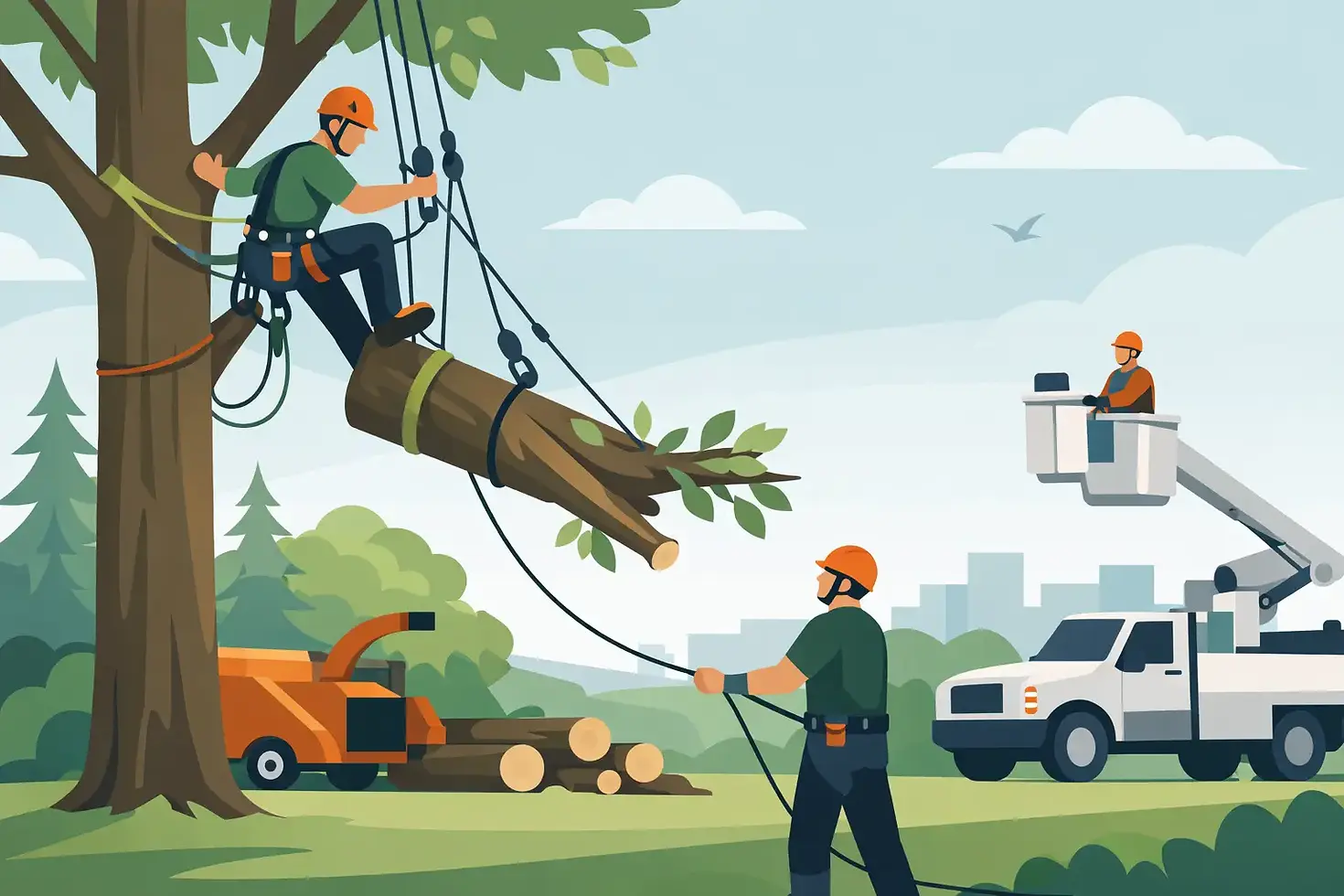
Rigging Removal Methods for Safer Tree Work
A tree that must come down beside a roof, driveway, fence, utility line, or landscaped yard cannot simply be cut and allowed to fall. Professional rigging removal methods give a qualified tree crew control over where each section goes, how quickly it moves, and how much force reaches the tree, equipment, and ground crew. That control is what protects people and property when a straightforward felling job is not an option.
For property owners, rigging is often the difference between a controlled removal and expensive collateral damage. It is also one of the clearest signs that a tree job requires trained professionals rather than improvised equipment or an inexperienced crew.
Why rigging is used in tree removal
Rigging is the planned use of ropes, pulleys, friction devices, slings, and anchors to move tree material in a controlled manner. It is commonly used when a tree is too close to a structure, when the available drop zone is small, or when terrain prevents crews from safely dropping large limbs.
In Gallatin Valley, mature conifers and cottonwoods often grow near homes, garages, access roads, and neighboring properties. Winter snow loads, wind exposure, decay, and tight lot lines can turn an otherwise routine removal into a technical project. A crew may need to dismantle the tree in small pieces from the top down, lowering every limb and wood section into a defined landing area.
The goal is not merely to get the tree on the ground. The goal is to remove it without striking a building, overloading a compromised stem, damaging a lawn or hardscape, or exposing workers and bystanders to unnecessary risk.
Common rigging removal methods
The right method depends on the tree's condition, its size and lean, the strength of available anchor points, the amount of clear landing space, and the assets below. A professional crew assesses these factors before climbing or cutting begins.
Controlled limb lowering
Controlled limb lowering is one of the most common methods for trees over structures and landscaped areas. A climber secures a branch with a rigging line before making the cut. The ground crew then manages the line through a friction device, allowing the limb to descend gradually instead of dropping freely.
This approach is useful for broad, spreading limbs that extend over roofs, patios, fences, or gardens. It limits impact at the landing site and allows the crew to place brush where it can be processed efficiently. The trade-off is speed. Smaller pieces take longer to remove, but that added time is often far less costly than repairing a damaged roof, crushed irrigation line, or broken fence section.
Negative rigging for vertical wood
When a tree is dismantled from above, a climber may need to remove trunk sections below the rigging point. This is known as negative rigging because the cut section falls a short distance before the rope catches and controls it.
Negative rigging creates significant force. The weight of the wood, the distance it drops, rope stretch, and the condition of the anchor all affect the load placed on the system. It is not a technique for weak, decayed, or poorly selected anchor points. Qualified crews carefully limit piece size, reduce fall distance where possible, and account for the condition of the remaining tree before using this method.
This method is especially valuable when there is no room to fell a trunk in one piece. It allows crews to remove a tall stem in manageable sections while keeping the work contained within a narrow drop zone.
Speed lining and lateral movement
Some limbs cannot be lowered straight down because the safest landing area is offset from the tree. In those situations, a speed line can move cut material laterally from the tree to a designated processing zone. The piece is attached to a sloped rope and travels away from the hazard area under controlled tension.
Speed lining can keep brush and small wood off delicate groundcover, retaining walls, sheds, or steep slopes. It is particularly effective when access is limited and the crew needs to avoid repeatedly carrying material through a protected area. However, it requires clear travel paths, reliable anchors, and disciplined communication. A line under tension stores energy, and a poorly planned setup can create serious hazards.
Mechanical assistance and crane removal
For exceptionally large, dead, storm-damaged, or inaccessible trees, mechanical assistance may be the safest solution. A crane can lift whole limbs or trunk sections vertically away from a structure before setting them in a secure landing area. Winches, loaders, and other equipment may also support material handling once pieces are on the ground.
Crane removal is not automatically the best answer. It requires adequate access, stable ground, sufficient overhead clearance, and careful coordination between the operator and tree crew. In the right setting, it can reduce climbing exposure and limit the number of cuts made over a building. In the wrong setting, equipment access or site conditions may make rope-based dismantling the better option.
What determines the safest rigging plan
Rigging is not a one-size-fits-all procedure. Before work begins, a professional assessment considers the tree's structure and the full worksite.
Tree condition comes first. Decay cavities, cracks, dead tops, weak unions, root damage, and insect activity can change whether the tree itself can safely serve as an anchor. A tree that appears solid from the ground may have internal defects that significantly limit rigging options.
The crew also evaluates the target zone. Rooflines, glass, power lines, vehicles, septic components, irrigation systems, and pedestrian areas all influence where material can land. Utility lines deserve special attention. Tree work near energized conductors requires appropriate clearances and, in many cases, coordination with the utility provider. A rope system is not a substitute for electrical safety procedures.
Weather and ground conditions matter as well. High winds can make suspended loads unpredictable. Ice, snow, wet bark, and muddy ground affect footing, equipment placement, and the ability of a ground crew to control material safely. In mountain weather, postponing a removal can be the professional decision when conditions do not support uncompromised safety.
Why equipment alone does not make a job safe
Homeowners may see ropes and assume rigging is simply a matter of tying off a limb. In reality, safe rigging depends on load calculations, gear inspection, knot selection, anchor evaluation, communication, and a clear understanding of how forces change during a cut.
A rope can have a high breaking strength and still fail in a real-world system if it is damaged, improperly loaded, run over a sharp edge, or subjected to shock loading. A branch can look substantial and still break out at a weak union. Even a correctly installed line can become dangerous if the landing zone is not secured or the ground crew is not positioned properly.
Professional tree crews use purpose-built equipment and inspect it routinely, but equipment is only one part of the system. The crew's judgment is what determines whether to lower a limb, redirect it, reduce its size, select another anchor, use mechanical assistance, or stop work until conditions improve.
What property owners can expect during a rigged removal
A well-managed removal begins with a site walk-through. The crew identifies hazards, discusses access, confirms what must be protected, and establishes a work zone. Vehicles, outdoor furniture, and other movable items may need to be relocated before cutting starts.
During the removal, homeowners should stay outside the designated work area and keep children and pets clear. Rigging operations involve overhead work, moving lines, suspended wood, chainsaw activity, and equipment traffic. A professional crew will control the site, communicate clearly, and adjust the plan if changing conditions reveal a new hazard.
After the tree is down, the work may include brush chipping, wood removal, site cleanup, and stump grinding if requested. The level of cleanup should be discussed during the estimate so there is no confusion about logs, chips, or final grading around the stump.
When a professional assessment is warranted
Request an assessment when a tree leans toward a structure, has dead or hanging limbs, shows visible decay, has been damaged by wind or snow, or must be removed from a confined space. The need for rigging is often apparent when there is no safe direction for a full-tree fall, but hidden structural defects can make the situation more complex than it looks.
Climbing Dutchman Tree Service approaches technical removals with certified arborist knowledge, disciplined planning, and a safety-first mindset. For hazardous trees near homes, commercial buildings, roads, or valuable landscapes, the right removal method protects more than the immediate work area. It helps protect your property, your liability, and the people who use the space every day.
If a tree on your property has limited room to come down safely, treat that limitation as useful information, not an inconvenience. A careful on-site estimate can establish the right rigging plan before a manageable hazard becomes an urgent one.


Comments