
Wildfire Landscaping Tips That Protect Your Home
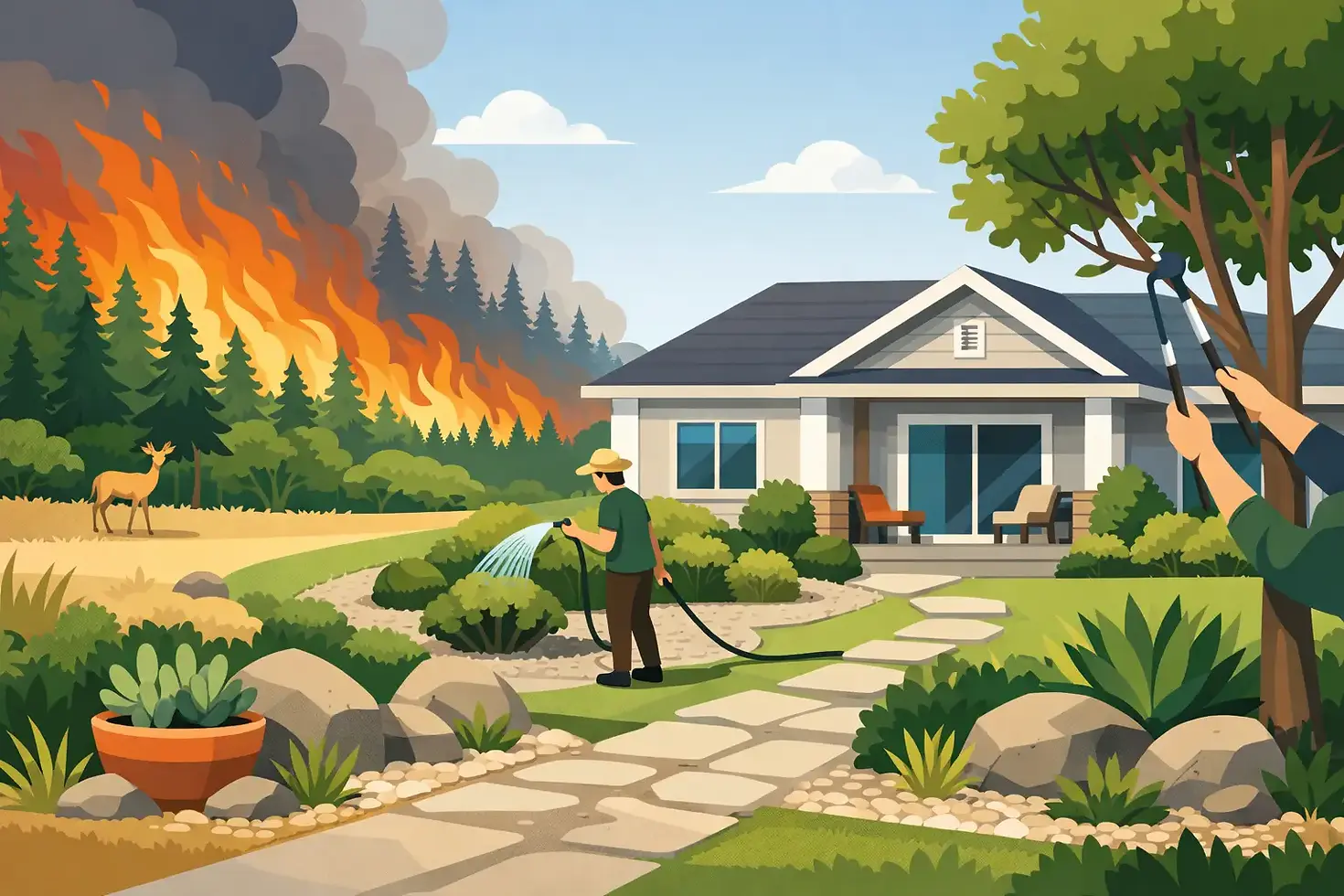
A wildfire does not need to touch a house directly to damage it. Windblown embers can travel far ahead of the main fire, collecting in dry needles, mulch, leaf litter, firewood, and vegetation beside a structure. Effective wildfire landscaping tips focus on interrupting that chain of ignition before fire season turns a manageable landscape issue into a property emergency.
For homeowners and property managers in the Gallatin Valley, the objective is not to strip a property bare. It is to create defensible space that slows fire, reduces ember exposure, and gives firefighters safer access if a wildfire reaches the area. That work requires a clear look at vegetation, slope, tree condition, building materials, and the way each part of the property connects to the next.
Start With the Home Ignition Zone
The area closest to a home, garage, deck, or outbuilding deserves the most attention. This is the zone where small maintenance failures can have serious consequences. Dry material under a deck, leaves in gutters, stacked lumber against siding, or shrubs pressed against windows can provide an ember with the fuel it needs to ignite.
Keep the first five feet around structures as clean and noncombustible as practical. Gravel, stone, bare mineral soil, and well-maintained hardscape are generally safer choices than bark mulch or dense plantings immediately beside the foundation. Move firewood, propane tanks, construction materials, and other combustible storage well away from buildings.
This is also the right time to look upward. Remove leaves, needles, and small twigs from roofs, gutters, valleys, and behind chimneys. Embers often settle in these locations. A clean roofline and properly maintained screens on vents can substantially reduce the number of places where embers can gain a foothold.
Wildfire Landscaping Tips for Trees and Shrubs
Trees add shade, value, privacy, and character to a Montana property. They can also become a continuous fuel path when low limbs connect to brush, tall grass, fences, decks, or the roof. The goal is not indiscriminate tree removal. It is strategic fuel reduction that preserves healthy trees while reducing ladder fuels and hazardous conditions.
Break the Fuel Ladder
A fuel ladder is vegetation that allows fire to climb from the ground into shrubs and tree crowns. Tall dry grass beneath dense shrubs, shrubs growing beneath low branches, and limbs hanging over a roof all create opportunities for fire to move upward.
Pruning lower branches can help create separation between surface fuels and the tree canopy. The appropriate clearance depends on species, tree health, slope, surrounding fuel load, and local conditions. Over-pruning can weaken a tree, increase sun stress, and create long-term health problems, so this is not a job for arbitrary cutting. A certified arborist can identify which limbs should be removed, retained, or monitored to improve both fire resilience and structural condition.
Shrubs should be managed with spacing in mind. A row of tightly packed evergreen shrubs may look like a single hedge, but during a fire it can act like one connected fuel bed. Break up dense masses where possible, keep shrubs away from windows and siding, and remove dead material from the interior and base of each plant.
Address Dead, Damaged, and Declining Trees
Dead trees, hanging limbs, broken tops, and severely declining trees are more than landscape defects. They increase fuel loading and may fail during high winds, fire activity, or emergency access operations. A dead limb over a driveway can also prevent equipment or first responders from reaching the property when time matters.
Hazard assessment should consider more than whether a tree looks alive. Lean, root damage, cracks, decay, weak branch unions, canopy dieback, and proximity to buildings all affect risk. High-risk removals near homes, power lines, fences, or valuable landscape features require controlled climbing, rigging, and a disciplined work plan. Attempting to remove large limbs or unstable trees without the right equipment can create immediate danger and expensive property damage.
Build Defensible Space in Layers
Defensible space works best when it is treated as a series of zones rather than a single wide clearing. The exact distances should be adjusted for lot size, topography, vegetation density, and applicable local guidance. Fire moves faster uphill, so properties on slopes often need more separation and more aggressive fuel management on the downhill side.
In the area immediately around structures, prioritize noncombustible surfaces, clean rooflines, and low-growing, irrigated, well-spaced plants. Farther out, maintain separation between shrubs and trees, mow or manage grasses before they cure, and remove accumulated downed branches and woody debris. Beyond that, focus on reducing dense thickets, dead material, and continuous vegetation that could carry flames toward the home.
Do not overlook driveways and access routes. A narrow drive lined with low branches and overgrown brush can limit emergency access and increase exposure for anyone evacuating. Maintain practical vertical clearance, keep turnaround areas open where possible, and make sure address numbers are visible from the road. These details support safer operations during a fast-moving incident.
Choose Planting and Mulch With Fire Behavior in Mind
No plant is truly fireproof. Plant performance depends on moisture, maintenance, weather, placement, and the intensity of the fire. Still, plant selection can reduce risk when paired with sound spacing and regular upkeep.
Prioritize plants that stay low, have higher moisture content, and are easier to maintain free of dead material. Avoid placing highly resinous, dry, or densely branched plants directly beside structures. The same species may present very different risks depending on whether it is isolated, irrigated, and maintained or crowded into a dry, neglected planting bed.
Mulch is often overlooked. Fine bark, pine needles, and dry wood chips can catch embers, particularly when they are installed against a foundation. Rock and gravel are typically better choices closest to buildings. Organic mulch can still have a role farther from the house, but it should be kept moist when practical, maintained at an appropriate depth, and cleared of dry leaf accumulation.
Maintain the Landscape Before Fire Season
Wildfire preparation is not a one-time cleanup project. Spring growth, summer heat, windstorms, insect pressure, and changing moisture conditions all affect the fuel profile around a property. A defensible-space plan is only effective if it is maintained.
Before the dry season, walk the property with a practical checklist. Look for needles in gutters, debris under decks, branches touching roofs, dead shrubs, stacked firewood, unmanaged grass, and storm-damaged trees. After wind events, inspect again. Broken limbs and fresh debris can quickly alter conditions.
Be careful with timing and methods. Avoid operating equipment that can produce sparks in dry grass during hot, windy conditions. If debris must be removed, chipped, or hauled, keep the work area clear and follow local burn restrictions and seasonal regulations. Burning yard debris is not a substitute for professional fuel management, especially when fire danger is elevated.
Know When Professional Tree Work Is the Safer Choice
Some tasks are appropriate for routine property maintenance, such as raking needles, moving firewood, trimming small dead material from the ground, and mowing grass when conditions allow. Other work carries a level of risk that warrants trained professionals.
Large limb removal, crown reduction, tree removal near structures, climbing work, and trees with visible decay or instability should be evaluated before anyone starts cutting. A poorly placed cut can send a limb through a roof, damage a fence, strike a person, or destabilize the remaining tree. In fire-prone landscapes, rushed clearing can also remove valuable healthy canopy while failing to address the fuels that actually threaten the home.
Climbing Dutchman Tree Service provides hazard mitigation, precision pruning, complex removal, debris removal, and fire break services for properties that need a professional plan. Certified assessment helps property owners make decisions based on tree condition and fire behavior, not guesswork or a one-size-fits-all clearance number.
A well-managed landscape should still feel like a landscape, not an empty lot. Start with the vegetation nearest your home, correct the hazards that create a direct fuel path, and maintain those improvements through the season. The best time to create defensible space is while every decision can be made carefully and safely.


Comments